
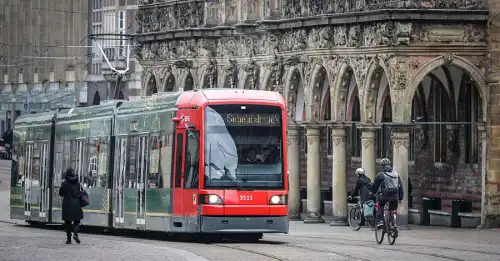
Photo: Focke Strangmann/picture alliance via Getty Images
Public transport fares in Kyiv might increase to 30 UAH per trip starting from July 15, as reported by the Kyiv City State Administration. However, Kyiv residents are unhappy with this innovation from the authorities, arguing that even European capitals have cheaper fares, while salaries in Ukraine are not European. In brief – how much do trips cost in other world capitals.
In the world’s major capitals, transport has ceased to be merely a means of conveying passengers from point A to point B. It has become a tool of social policy, climate strategy, car control, and even labor market management. In some places, a metro ride costs like a cup of coffee, while in others, the state makes transport entirely free. Some cities focus on cheap mass access (Seoul), others on the network’s self-sufficiency (London), and yet others on radical cost reduction through state subsidies (Luxembourg, Vienna).
London
A single trip on the London Underground costs £2.8–3.4 (approximately 150–180 UAH), and on a bus – £1.75 (95 UAH). This is one of the most expensive transport systems globally, employing a zonal model: the longer the journey, the higher the cost. London is divided into nine fare zones, with the city center traditionally being the most expensive.
The city utilizes the Oyster Card system and contactless bank card payments. Passengers tap their card upon entry and exit, and the system automatically calculates the trip cost.
An interesting aspect of the fare system is the fare cap. Once a passenger reaches a certain daily (£8.50) or weekly (£44–45) spending limit, all subsequent journeys become free. This represents a compromise between high tariffs and social accessibility.
The London public transport model is considered almost market-driven: state subsidies are very low here. Passengers cover a significant portion of the system’s costs themselves, although concessions for children and people with disabilities are maintained, along with discounts for students and free travel for pensioners. High fares are intended to offset low state subsidies and encourage remote work.
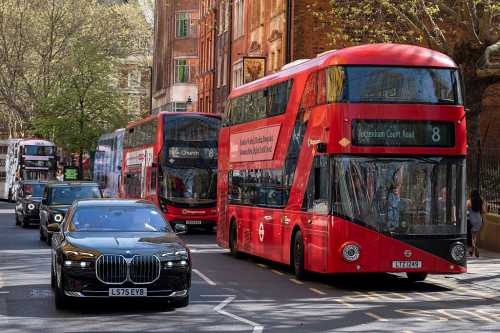

Everything in London is authentic, but expensive. Photo: Mike Kemp/In Pictures via Getty Images
Paris
Last year, Paris reformed its public transport fare system. It transitioned from a complex zone system to a unified model for the Île-de-France region. The Navigo card is used here, covering metro, buses, trams, and suburban trains.
The state actively subsidizes French public transport. For instance, employers are obligated to reimburse employees for at least half the cost of their travel pass. This integrates transport into social policy and labor law simultaneously.
Paper tickets are rapidly disappearing in Paris: the city is moving towards digital travel passes and smartphone payments. Concessions are traditional, covering students, pensioners, the unemployed, low-income families, and parents with multiple children.
A single metro ride in Paris costs €2.55 (115 UAH), and a bus or tram ride costs €2.05 (approximately 92 UAH). A day pass for unlimited travel is available for €12.30 (631.6 UAH), and a monthly Navigo pass costs around €88–90 (4518.6–4621.3 UAH).
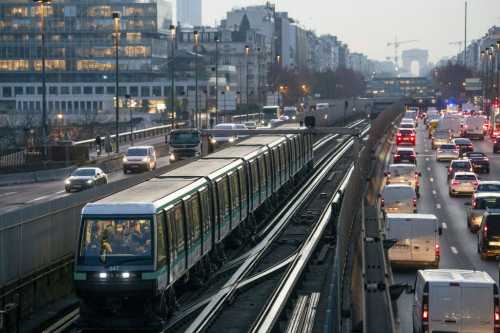

In Paris, one card covers travel on the metro, bus, tram, and suburban trains. Photo: MARTIN BUREAU/AFP via Getty Images
Berlin
Germany’s main transport experiment is the Deutschlandticket (“Germany Ticket”). For a fixed monthly fee of 58 euros (2976 UAH), passengers gain access to almost all urban and regional transport across the country. This is no longer just a city pass but effectively a nationwide transport subscription. However, the unified pass is not valid on high-speed ICE trains and some commercial routes.
A single journey here costs €3.80 (approximately 170 UAH). A purchased ticket is valid on the metro, buses, trams, urban electric trains, and regional trains. Concessions are available for students (SchülerTicket), welfare recipients, pensioners, and low-income citizens (Sozialticket, €53 per month).
Vienna
Austria is one of the countries that has begun discouraging its citizens from using cars. To achieve this, it offers a unique public transport system provisionally named “one euro a day.” A single trip in Vienna costs €2.40 (about 108 UAH), and an annual pass for all transport modes is €365 (18,732 UAH), literally translating to “a euro a day.” This is the most popular payment format.
The city consciously subsidizes transport to reduce the number of cars, lower air pollution, and even maintain social equality. As a result, a significant portion of Vienna’s residents use annual passes, allowing them to travel on the metro, trams, buses, and suburban lines.
Concessions are provided for children, pensioners, and students who receive a special SemesterTicket for travel.
Luxembourg
Luxembourg became the first country in the world to completely abolish public transport fares. Travel is free on trams, buses, and second-class trains. This decision was driven by efforts to combat traffic congestion and the country’s high solvency. However, tickets are required for first-class travel and for cross-border routes outside the country.


There are no fare dodgers in Luxembourg; everything is free here. Photo: Oliver Dietze.
Tokyo
The Tokyo system is considered one of the most complex and efficient in the world. There is no single operator; transport is divided among numerous companies. Fares in the Japanese capital depend on the distance, the transport operator, and the type of line. The main travel cards in the capital are Suica and PASMO.
The main feature of public transport in Japan is that carriers earn not only from tickets. They own shopping centers, real estate, stations, offices, and advertising space.
A single trip in Tokyo costs ¥180–220 (approximately 50–62 UAH). Monthly passes are quite expensive, but commuting passes (for work travel) are paid for by the employer, a provision included in any employment contract.
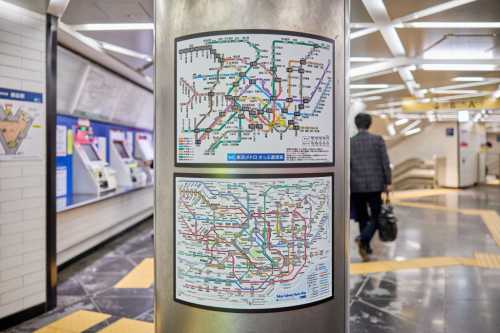

The Tokyo system is considered one of the most complex and efficient in the world. Photo: Shoko Takayasu/Bloomberg via Getty Images
Seoul
The capital of South Korea boasts one of the world’s best transport systems in terms of price-quality ratio. A single trip costs 1500 won (approximately 45 UAH), with free transfers between buses and the metro. The system treats a journey as a single route rather than separate trips.
Elderly residents of Seoul use public transport for free, and discounts are available for children and youth. The travel card is T-money.
New York and Washington
New York uses a flat fare system, meaning the price is fixed regardless of distance. You can travel a few stops or cross almost the entire city for the same price. The OMNY system allows payment via bank card or smartphone. A single journey costs $2.90 (approximately 120 UAH).
Washington’s public transport system is primarily oriented towards suburban commuters. The cost depends on the distance, time of day, and line congestion. During peak hours, trips are significantly more expensive, with a single journey costing between $2 and $6.75 (approximately 82–280 UAH).
This situation reflects the American model, where transport is often built around daily commuting from and to the suburbs.
Beijing
China actively subsidizes its public transport as an element of urban stability and economic growth. In megacities, payment is fully digitized – trips can be paid for via QR codes, WeChat, Alipay, or mobile applications.
A single journey costs from 3 yuan (approximately 17 UAH). The final cost depends on the distance (the longer the route, the higher the price).